Davidoff CEO on enticing new customers, links to the art world

Davidoff’s gregarious CEO, Hans-Kristian Hoejsgaard, was at Art Basel last week to present the brand’s Humidor Damajagua.

The humidor, crafted by renowned French marquetry artist Rose Saneuil, is seen by the company as an ode to the Caribbean.

Saneuil was inspired by Davidoff’s Caribbean heritage and the forest of Damajagua in the Dominican Republic.

The drawing shows a vibrant vermilion bird, a symbol of natural benevolence, swooping over a mystical Caribbean forest, encouraging the tobacco leaves beneath to thrive.

Davidoff has been cultivating filler tobacco in Damajagua since 2002.

The luxury cigar brand also operates the Davidoff Art Initiative, launched in 2012 in the Dominican Republic.

The Art Initiative supports contemporary art and artists in the Caribbean.

We sat down with Hans-Kristian at Art Basel to discuss how Davidoff attracts new clients and its links to the art world.

Japanese ceramicist Koji Usaka’s work draws crowd to Central gallery

Japanese ceramicist Koji Usaka’s work is instantly recognisable. Telltale signs of an Usaka piece are the whimsical swirling patterns he often uses, plus the fusion of traditional and modern styles and the iconic red Mount Fuji that has become a central theme in his work.

Even in Hong Kong, where his works are now on display for the first time, there’s no mistaking his unique style and technique.

“What’s distinctive about his work is not only the organic shapes but also the swirling red pattern,” says Rachel Kosciuszko of Waka Artisans in Central, where Usaka’s works are being exhibited.

“You could take any one of his pieces and put it anywhere in the world, and someone who knows his work would be able to pick it out,” she says.

The exhibition – running until 12 April – features a large collection of Usaka’s work, including everything from bowls and pouring jugs to ornate plates and sake bottles. As testament to the artist’s popularity, the gallery was packed with visitors on opening day, and many of the artworks were already marked with a ‘reserve’ sticker.

Along with golden moons and birds (symbols of happiness and health), Mount Fuji is one of the main motifs of Usaka’s work.

In Japanese culture, the iconic mountain peak is representative of strength and power, and some artists feel they need to earn their stripes before using such an important symbol in their work.

For his part, the ever-modest Usaka waited until he turned 50 before he started using it.

Everything Usaka makes is entirely crafted by hand, so no two pieces are exactly the same.

Usaka uses two different techniques to mould the clay – oxidation firing and reduction firing – and the level of heat determines its colour. After the clay has been shaped, the details can be added one layer at a time. A simple piece would be fired in an oil kiln three times, while a more complex piece could undergo five firings.

The Waka Artisans gallery has featured many prominent Japanese artists since its inception.

However, in a break from tradition, its next exhibition will feature the works of five young Hong Kong ceramicists. That exhibit will be held from 28 April to 7 May.

Waka Artisans is located at Unit S303, Block A, PMQ, 35 Aberdeen Street in Central.

The gallery is open from 12pm to 7:30pm.

For more information, visit www.wakaartisans.com.

Text: Emily Petsko
Asia Contemporary Art Show sells HK$26 million of artwork

The success of the 10th edition of the Asia Contemporary Art Show proves there is more to Art Week in Hong Kong than simply Art Basel and Art Central.

The show welcomed more than 10,000 collectors and an estimated HK$26million of sales were made over the fair’s four days.

“We were delighted to have been the first art fair to open during Hong Kong Art Week,” said Director Mark Saunderson. “There was a real buzz during the Langton’s VIP Collectors Preview on Friday, with visitors queuing a few hundred deep at peak hour.”

The Asia Contemporary Art Show is held twice a year in Hong Kong, once in March and once in October.

Visitors to the show, which is held across four floors of the Conrad Hotel, viewed more than 3,000 works presented by more than 80 galleries and artists from Asia and beyond.

Unlike Art Basel and Art Central which rely more on exhibitors, more than 50 artists chatted to collectors and art enthusiasts at the show.

The exhibition showcased both established and emerging artists.

Watch: Art Basel opens its doors to art lovers

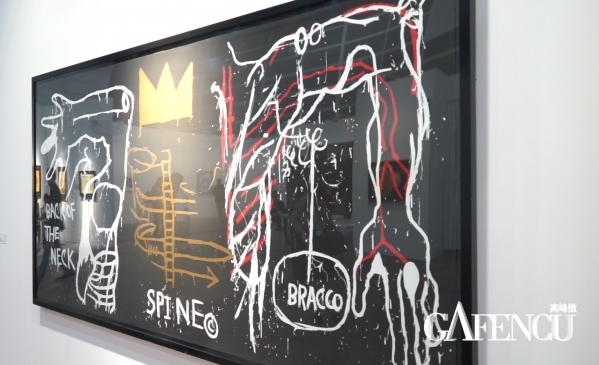
The fifth edition of Art Basel has opened its doors to art lovers in Hong Kong and this year’s fair is bigger than ever with 242 galleries from 34 countries.

Visitors to the fair can explore more than six different sections.

The Galleries section is hosting 190 modern art and contemporary exhibitors. The Insights section features 27 projects showcasing artists from Asia and the Asia Pacific region, and over 25 galleries are presenting exhibitions in Discoveries.

Encounters is dedicated to showing large-scale exhibits. Kabinett is a new section this year showcasing curated exhibitions in an architecturally delineated space within their booths.

Watch our video to see some of the highlights of this year’s Art Basel.

The fair is being held at the Hong Kong Convention and Exhibition Centre until 25 March.

VIDEO: Third edition of Art Central launches in Hong Kong

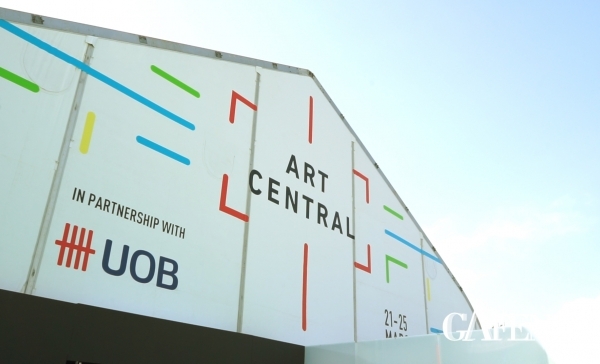
The third edition of Art Central is under way at Central Harbourfront and art fans are in for a treat with over 100 international galleries showcasing contemporary art.

This year’s Art Central features performance art pieces, site-specific installations, moving images, talks and more.

“As we return for the third edition of Art Central, we are proud to present our strongest programme to date,” said Charles Ross, the managing director at Art Central.

“As a content-driven fair that pushes boundaries in experimentation, we are dedicated to fostering new practices and discovering new talents in contemporary art.”

Gafencu spoke to Japanese sound artist Yuri Suzuki about his interactive sound installation, Sharevari, which was unveiled by Swarovski.

Art Central is on until 25 March at Central Harbourfront.

Check out our video of this year’s event and interview with Suzuki.

For more information click here.

Givenchy sells personal collection of furniture for nearly HK$275 million

French fashion designer Hubert de Givenchy made a tidy profit at a recent Christie’s auction after he sold some furniture from his personal collection for €32.7 million (HK$274.6 million).

Of course, in true Givenchy fashion, it wasn’t just any old furniture.

Akin more to works of art, the pieces were made by Diego Giacometti, the late Swiss sculptor and designer, whom Givenchy knew personally.

The pair met and became friends in the 1960s thanks to an introduction made by Gustav Zumsteg, the director of fabric company Abraham. Shortly after they met, Givenchy purchased his first Giacometti piece – a guéridon (small table), which was also sold at the auction. Throughout the years, Givenchy commissioned a number of furniture pieces and artworks from Giacometti.

One piece, an octagonal table from 1980, set a new auction record for the artist, selling for €4,162,500 – more than five times the estimate. It was the top price of the auction.

Remarkably, 100 percent of the lots sold above their pre-sale estimates.

“We are very proud of these extraordinary results,” said François de Ricqlès, president of Christie’s France. “Thanks to Hubert de Givenchy’s elegance and perfect taste, this sale was a beautiful tribute to Diego Giacometti whose new auction record confirms his position as one of the most talented artists of the 20th century.”

Text: Emily Petsko

Photos: Christie’s

Asia Contemporary Art Show starts this week at the Conrad Hotel


Returning for the 10th time, the Asia Contemporary Art Show opens on Friday, 17 March at the Conrad Hotel, Hong Kong. Featuring over 3,000 works of art spread across 80 different spaces, the exhibition showcases both established and emerging artists.

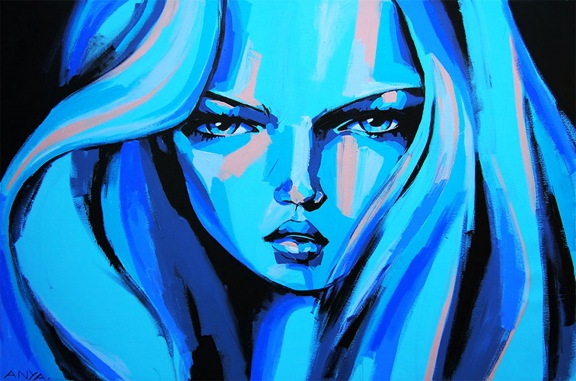
Covering a range of different mediums – from photography to sculpture and painting to prints – many of the pieces are limited edition. Furthermore, much of the work on display is from rare private collections, giving visitors the chance to see previously unseen pieces. Artists on display include the likes of Fawwas Sukri, Anya Brock, Cho Yea Jae and Jeff Murray.

This year, the show will also feature two additional exhibition projects: China Perspectives and Artist Projects. China Perspectives aims to present a series of selected work that interrupt and challenge traditional Chinese art narratives. Artist Projects will be an intimate, relaxed space where 30 artists can sell their work to collectors and engage in more detailed discussions about their art and creative processes.

The event will open with an exclusive VIP collectors preview on Friday evening, held at the Conrad hotel. It is the only art show to be held in a five-star establishment in Hong Kong. Keen collectors will be able to snap up work and there are a variety of different price brackets available.

For more information, visit the ACAS website

Feeling extravagant? Splurge on the world’s most expensive Easter eggs

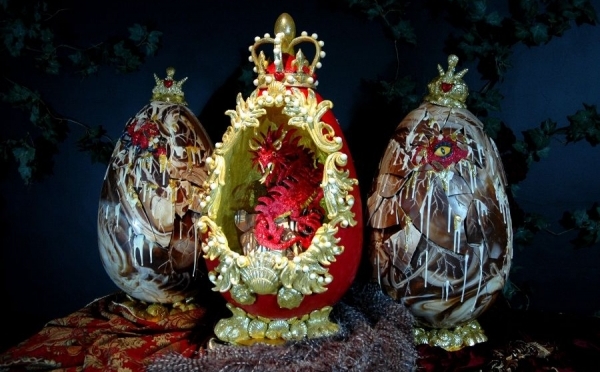
Easter is a time for chocolate treats and what better way to celebrate than with a luxuriously decadent creation from UK-based chocolate company, Choccywoccydoodah. The eggs, which cost £25,000 (HK$240,900) weigh in at 100kg and feature Fabergé-style designs inspired by the 19th-century gifts bestowed on Russian tsars.

Coming in a trio and handcrafted from Belgium chocolate, each egg depicts mythical creatures such as unicorns, although custom designs can also be ordered. One design features a scene of Brighton’s Royal Pavillion where the company has a store. Each egg takes about three weeks to create and potential buyers are expected to be overseas investors or members of royal families.

Choccywoccydoodah’s owner and creative director Christine Taylor said, “I have always loved the actual Fabergé eggs. There will be people who will set their hearts on them and want to order them. We do have customers who will spend money if they want it enough.”

However, if you don’t mind splurging on inedible eggs, the ‘Mirage’ egg, created by Manfred Wild is an even more decadent purchase. Encrusted with 1,000 diamonds on the outer shell – 100 of which are brilliant-cut – the egg opens up to reveal an ornate globe made out of 18-carat gold. The globe lifts to reveal a rock crystal dove on a gold olive branch, which is designed to symbolise world peace.

The ‘Mirage’ took three years to make with elite craftsman across three continents all contributing to the process. The egg costs a cool £5 million, about the same price as a central London home, with the outer diamonds alone valued at £1.5 million.

Click here for more information.

Text: Siobhan Brewood-Wyatt

Seal of Emperor Qianlong sold for HK$170.2 million

_92977093_path

The auction world was left stunned recently when an 18th century Chinese imperial seal sold for a staggering €21 million (HK$170.2 million). It wasn’t just the price tag that caused a stir, though. The amount was over 20 times the original estimate. Unsurprisingly, the auction house, Drouot, was delighted with the outcome.

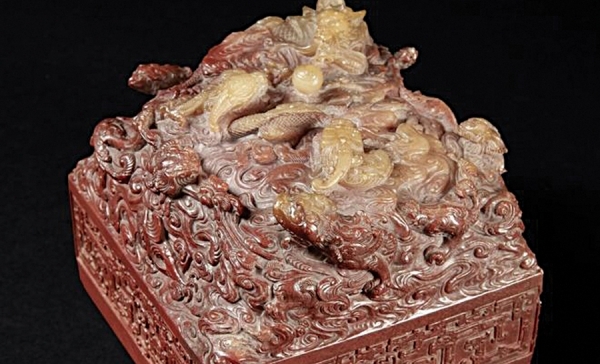
The rare beige and red nephrite stamp is believed to date back to the Qianlong period, between 1736 and 1795. Once owned by Emperor Qianlong – the longest serving monarch in Chinese history – it features nine dragons across the sides, said to represent Qianlong’s empirical power and masculinity. Nine is also the maximum figure in Chinese cosmology.

Chinese seal - emperor Qianlong

Prior to the frantic bidding war, the seal had been in the same family for over 100 years, after it was acquired by a French naval doctor in the late 19th century.

“The seal was used to sign paintings by Emperor Qianlong himself, along with calligraphy,” according to Alice Jossot, an expert at Drouot.

Although the emperor was famed for his collection of seals (as many as 1,800 are once thought to have existed), just under half of the seals have vanished in the centuries since. The new owner is an unnamed Chinese collector; other items in the collection included two paintings by Japanese artist Katsushika Hokusai.

Original Tintin drawing sells for HKD$12.16 million

Tin Tin 2nd image - please cut out the character and only use him, not the background

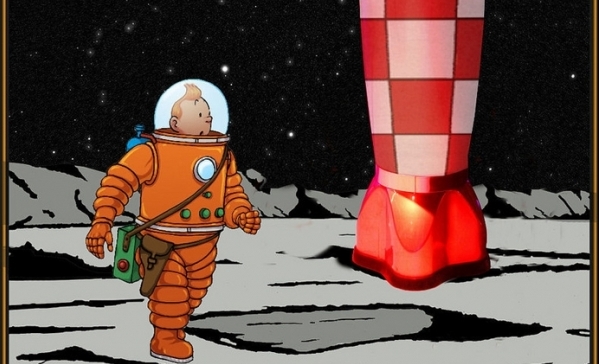
The much loved Adventures of Tintin franchise has attracted collectors for over half a century, and a recent auction at Artcurial, Paris, suggests the comic series is in no danger of losing its appeal. An original drawing from the Explorers on the Moon edition sold for a record-breaking €1.55 million (HKD$12.16 million).

Originally estimated to sell for between €700,000 and €900,000, the 50cm x 35cm drawing in Chinese ink is considered one of Hergé’s – the Belgium cartoonist and Tintin creator – most significant pieces from the postwar period. Depicting the comic’s eponymous boy-hero, his dog Snowy and Captain Haddock walking on the moon, the artwork is considered as iconic as other Tintin greats, such as Tintin in Tibet.

Artcurial’s comics expert, Eric Leroy, described the sale as “an exceptional price for an exceptional piece”; the sale set a record price for a single cartoon. It still wasn’t quite enough to beat Hergé’s previous record, though – a double page ink drawing that sat inside the front cover of all Tintin adventures between 1937 and 1958 that sold for €2.65 million to a private American buyer three years ago.

The recent sale highlights the growing popularity of cartoon art at auction houses. Industry experts say that prices have increased tenfold in the past decade alone.