
Under the hammer: Fab Four auction sales (April 2026)

Ruby February

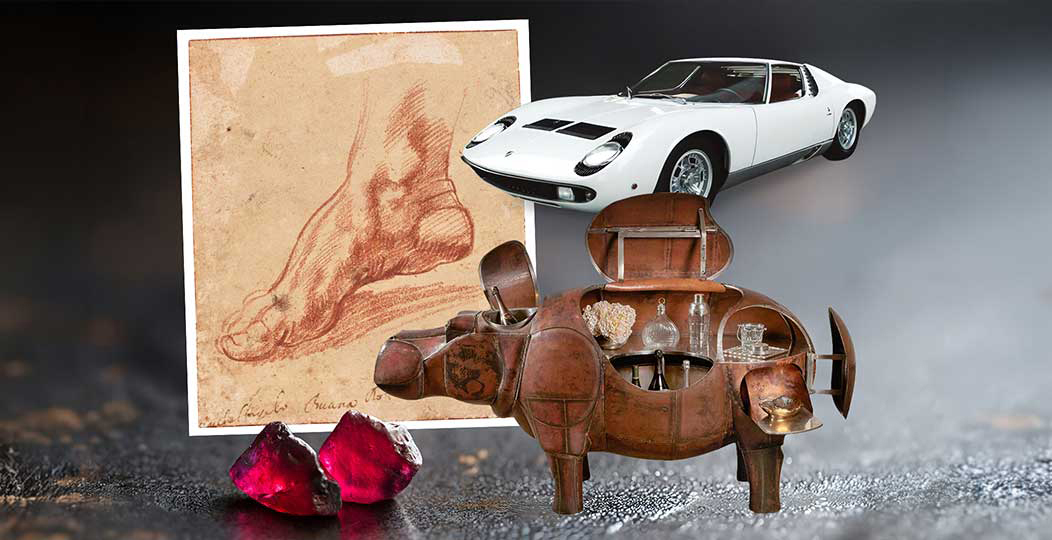
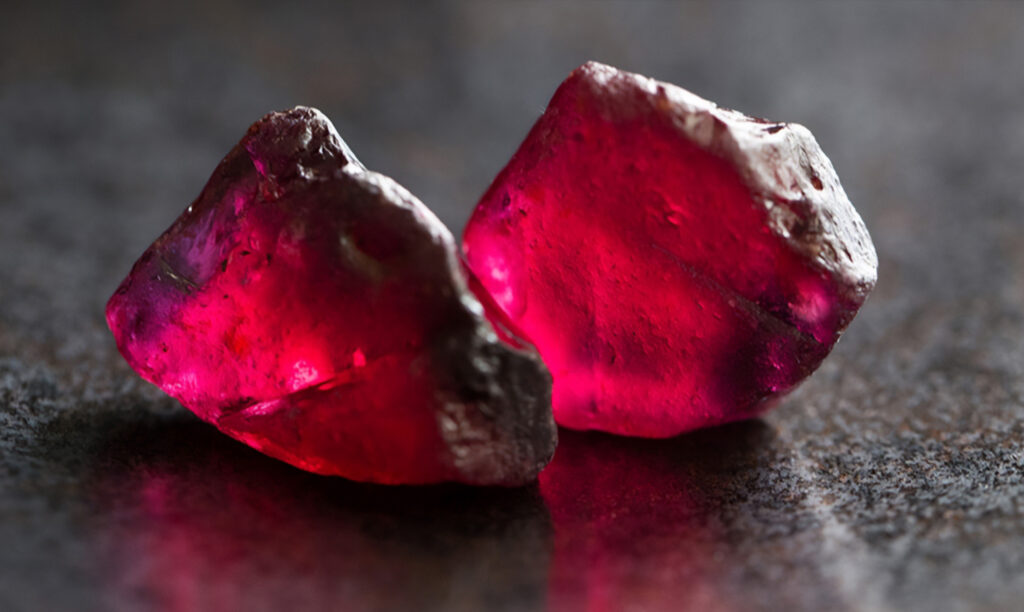
Gemfields mining group generated a substantial HK$415 million from its recent mixed quality ruby auction held in Bangkok, underscoring continued international demand for responsibly sourced gemstones. Some 189,620 carats of rough rubies changed hands at the February sale, primarily from the Montepuez Ruby Mine in the northeast, which is recognised as one of the world’s most significant ruby deposits.

Mozambican rubies have gained prominence alongside traditional Burmese stones over the past decade. The structured auction platform provided by UK-headquartered Gemfields emphasises transparency, traceability and ethical-sourcing standards, reinforcing buyer confidence.

Offering a broad spectrum of sizes, saturations and clarity grades, the auction attracted high-jewellery house suppliers as well as manufacturers. Attendees could admire the splendid stones at private viewings before the online bidding. The strong results, with most lots successfully placed, marked a reaffirmation of growing investor and industry appetite for rubies and other coloured gemstones.

Prince of a Ride
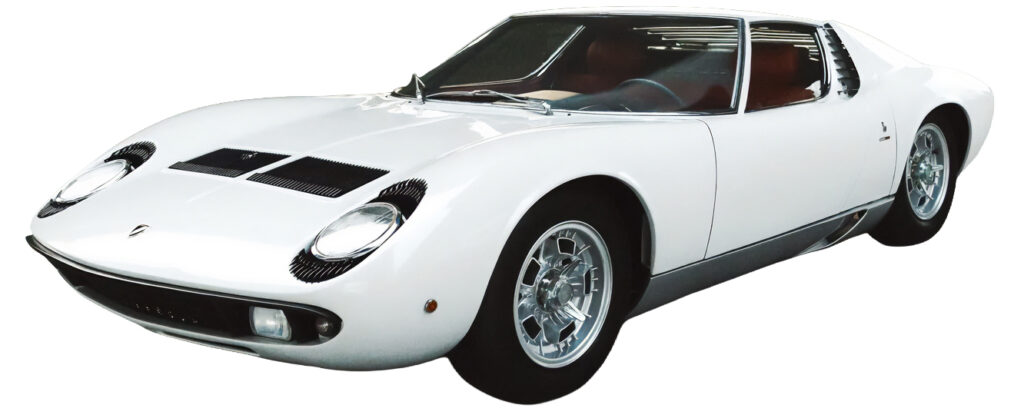
A sleek white 1968 Lamborghini Miura P400 originally owned by a Saudi prince was steered to a handsome price of HK$16.8 million by Broad Arrow Auctions, reaffirming the model’s status as one of the most important early supercars. Introduced in 1966, the Miura transformed automotive design with its revolutionary mid-engine layout, placing a transverse 3.9 litre V12 behind the cabin and producing about 350 horsepower. This engineering breakthrough established the template for generations of high-performance sports cars that followed.

Signature details such as the delicate ‘eyelash” headlamp surrounds and sensuous low profile contribute to its enduring visual drama. With fewer than 280 early Miura variants produced, surviving examples remain highly sought after by collectors worldwide.

The model’s consistently lofty auction results reflect sustained global demand for blue-chip Italian classics, particularly landmark cars that reshaped performance and styling standards. Sixty years after its debut, the Miura remains both a sculptural icon and a defining milestone in Lamborghini’s history.

Foot of Note
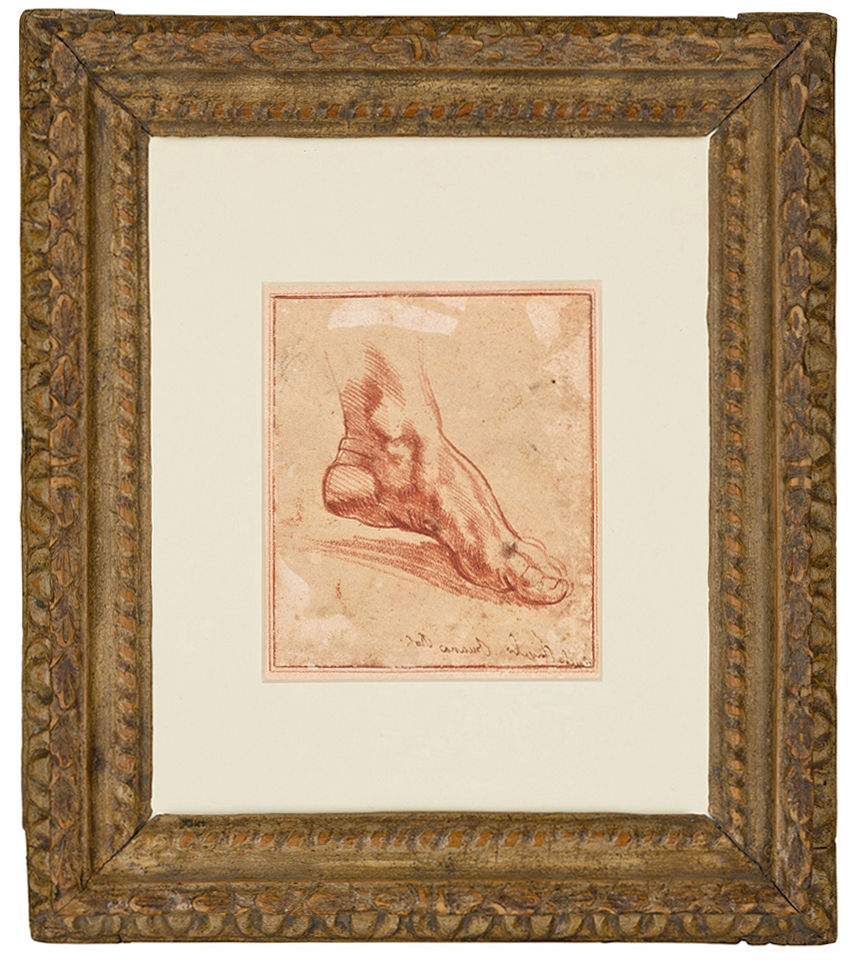
A rare, recently rediscovered Michelangelo drawing realised a staggering HK$212.8 million at Christie’s in New York, more than 10 times its high estimate in a new auction record for the Renaissance master. This diminutive sketch of a foot offers intimate insight into the artist’s creative process, revealing how he refined complex compositions through dynamic anatomical exploration and compositional experimentation.

Thought to date to 1511-12 and executed in red chalk on paper, it is one of countless studies made for Michelangelo’s monumental task of painting the Sistine Chapel ceiling. Most of those that survived are held in major museum collections, making any newly available example a landmark event.

The drawing in question, which had been sent to the auction house on spec by an owner unaware of its illustrious provenance, relates to a fresco of the Libyan Sybil stepping down from her throne. More than five centuries after its creation, it stands as a powerful testament to Michelangelo’s enduring influence and the continued global demand for Old Masters of the highest tier.

Hippo
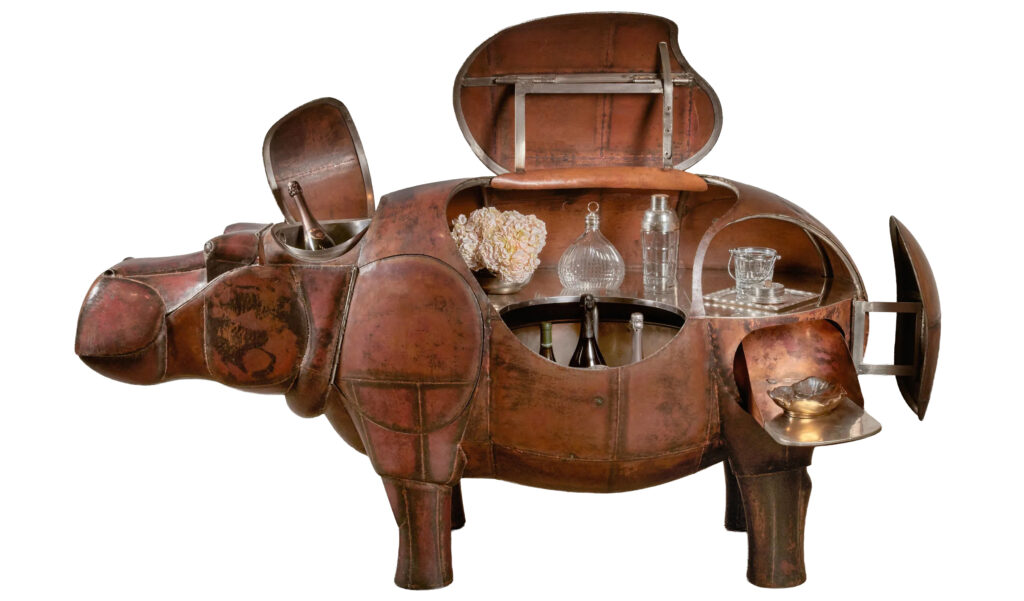
François Xavier Lalanne’s celebrated Hippopotame Bar achieved an extraordinary HK$245.9 million at auction in New York, underscoring the continued global appetite for museum-quality design with sculptural presence. Created in 1976 as part of the famed French sculptor’s iconic animal-furniture series, the baby-size hippo is cast in hand-wrought copper and opens to reveal a fully-fitted bar. Lalanne’s appeal among collectors has long been defined by the duality between monumental solidity and playful utility.

Subsequently produced in a limited edition in bronze, the unique piece stands as one of the most coveted examples of 20th-century French design. The exterior captures the muscular form and textured hide of a resting hippopotamus, while the interior surprises with polished compartments designed to hold bottles and glassware. At once functional object and fantastical sculpture, it epitomises Lalanne’s ability to merge fine art, design and wit.

The Sotheby’s result positions this 50-year-old bar as the most valuable design object ever sold at auction. While reflecting sustained demand for rare, statement-making works, it reaffirms Lalanne’s enduring influence in the collectible design market.

Under the hammer: Fab Four auction sales (March 2026)

Ageless Bronze

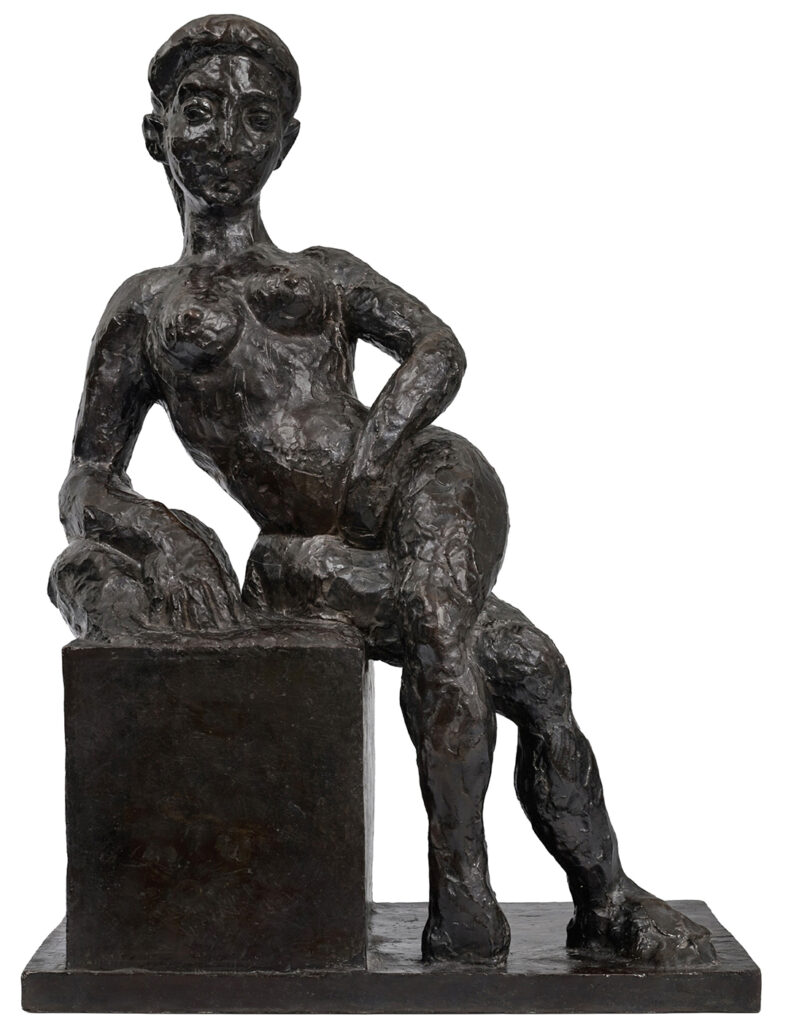
When the imposing Figure Décorative bronze by Henri Matisse achieved US$16.7 million (HK$130.5) at auction, the result resonated far beyond the Sotheby’s New York sale room. It was not only a record-setting transaction – the second highest ever for a Matisse bronze sculpture – nor just a reaffirmation of the French visual artist’s stature. Instead, the moment marked a profound shift in how collectors are reassessing sculpture’s physicality and permanence in an era dominated by the intangible.

Matisse is best known as a painter of radiant colour and lyrical line, yet his sculptural practice was never secondary. For him, bronze was a medium where form could be stripped of excess and the beauty of the human body celebrated. Figure Décorative, conceived in Paris in 1908 and cast in 1950, embodied this ethos. Its curved contours, balanced volumes and strident but serene gaze personify a fusion of modernist innovation and classical idealism. Matisse’s sculptures are now understood as foundational to his thinking about form and balance. They reveal the discipline behind the freedom, and the structure beneath the colour.

Emerald Geometry

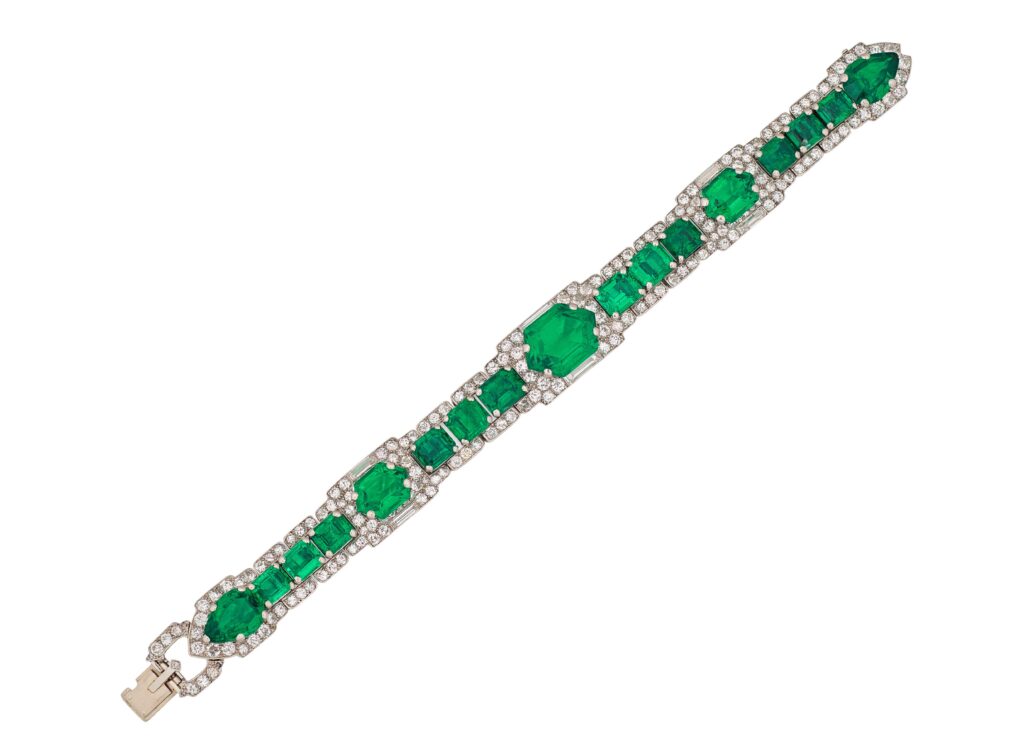
For a Cartier Art Deco emerald and diamond bracelet to command as much as £1.1 million (HK$11.7 million) at auction in London was not a surprise for connoisseurs but a confirmation. Christie’s spectacular sale of this treasure from the Wimbourne family collection reaffirmed what has long been understood: that the marriage of Cartier craftsmanship, Art Deco design and exceptional emeralds occupies one of the most enduring positions in the luxury market.

Created circa 1925, the bracelet exemplifies the aesthetic confidence of the Art Deco era, a period when Cartier redefined jewellery design through geometry, symmetry and a cosmopolitan vision. Set in platinum, it features 17 Colombian emeralds in pear, square, rectangular and hexagonal cuts interspersed with old‑cut and baguette diamonds arranged in crisp architectural harmony. The bracelet nearly tripled its pre-sale valuation. The result reflects a renewed appreciation for jewels as cultural artefacts, not merely ornaments. Once considered a secondary collecting category to fine art, jewellery is now understood as portable heritage – collectibles that carry artistry, rarity and narrative in equal measure.

Lovely Bones

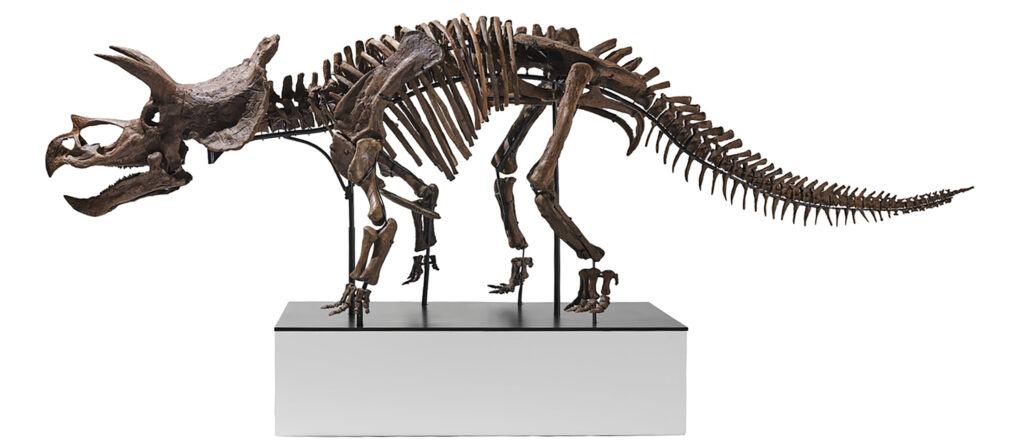
The auction of a juvenile Triceratops skeleton for a mighty US$5.4 million (HK$42 million) marks a defining moment in the evolving relationship between science, art, cultural spectacle and high-end collecting. In Phillips’ first foray into the prehistoric natural world, the beautifully preserved dinosaur – joined by several other precious fossils – guest-starred at a prestigious New York evening sale of Modern and Contemporary Art. It went for more than double its low-end estimate, underscoring the notion that collectors at the top of the market are no longer constrained by traditional categories.

This two- to six-year-old Triceratops possesses a distinct emotional resonance. Smaller in scale at about 4.4 metres (14.4 feet) long, and lighter in structure, it evokes fragility rather than dominance, telling a quieter story of growth interrupted, of a life some 66 million years ago suspended in transition.

Unearthed a decade ago in the Badlands of South Dakota and mounted to museum standard, the skeleton boasts an impressive original-bone count of more than 70%. It’s an amount that makes this prized preservation the most complete juvenile Triceratops around – and one that will probably never be surpassed.

Instrumental Panel

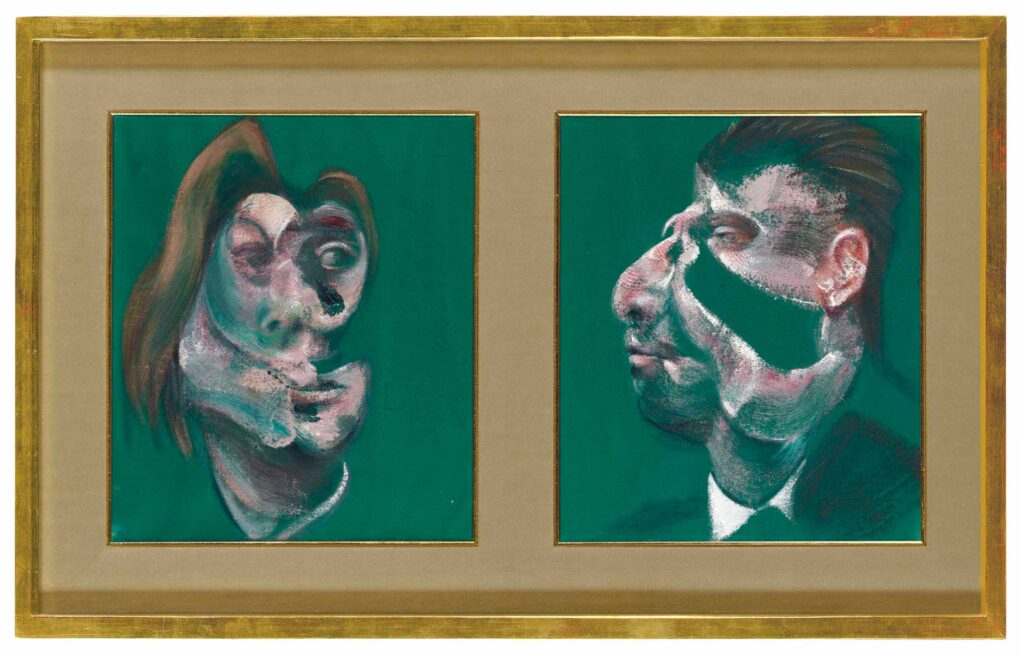
Francis Bacon’s art has long occupied a singular position in modern canon – raw yet controlled, violent yet precise. In a market increasingly drawn to works that challenge as much as they reward, the most recent auction appearance of his unsettling 1967 diptych, Study for Head of Isabel Rawsthorne and George Dyer – which sold for a hefty US$16 million (HK$125 million) at Phillips New York – affirms the enduring authority of Bacon’s work and the unique emotional force of the diptych.

Painted in 1967, it is the first of only 10 diptychs by Bacon, and one of only two that pair the muses who were central to a defining decade in his life – close female friend Rawsthorne, and Dyer, his lover. The Irish-born British figurative painter turned to the diptych not as a narrative device but as a psychological one. Amplifying his lifelong obsession with fragmentation, two panels placed side by side create tension rather than resolution.

Bacon’s themes of power, vulnerability and isolation are timeless, but they also feel acutely contemporary. In a world marked by instability and psychological strain, his visual language feels less historical than prophetic.

Under the hammer: Fab Four auction sales (February 2026)

Brazilian Luxe

A magnificent Paraiba tourmaline, celebrated for its saturated, luminous blue colour and starring in a Tiffany & Co. necklace of finely matched diamonds, fetched a world-record price at auction in New York in December last year. The 13.54-carat gemstone went under the hammer for US$4.2 million (HK$32.7 million), more than 10 times Christie’s low estimate. 

The remarkable price affirms both the rarity of this triangular-modified, brilliant-cut tourmaline mined in Brazil and the lasting desirability of the storied US jeweller’s most spectacular creations. A pair of matching Paraiba tourmaline and diamond earrings – featuring glorious neon-blue oval stones weighing 3.45 and 3.19 carats – echoed the same design language: elegant proportions, meticulous setting and a harmony between colour and light. They realised US$1.3 million, underscoring the strength of the ensemble as a museum-worthy suite. The necklace and earrings exemplify a pinnacle moment where provenance, exceptional stones and timeless design converge. Capturing the imagination of collectors, they reinforce Tiffany & Co.’s legacy at the highest level of the jewellery world.

Master Pièce

The Audemars Piguet ‘Grosse Pièce’ (Big Piece) pocket watch has clocked in as the brand’s most expensive timepiece not sold for charity. One of the most important achievements in haute-horlogerie history, this marvel of the manufacture was auctioned for US$7.7 million (HK$60 million) last December, and shares the title as the most complicated AP pocket watch ever crafted.

A testament to the technical mastery and artistic ambition that defined Audemars Piguet’s early grande-complication creations, the No.16869 was commissioned by a London watch company, S. Smith & Son, in 1914 on behalf of an American client. Among a total of 19 mechanisms housed within a richly engraved yellow-gold case, it boasts a perpetual calendar, minute repeater, chronograph functions and astronomical indications. Appearing as the London night sky on one side of the watch’s double face, the celestial function renders it unique,.

Designed at a time when pocket watches represented the pinnacle of mechanical innovation, the ‘Grosse Pièce’ exemplifies the era’s pursuit of technical perfection. It also confirms Audemars Piguet’s place among the great names in watchmaking.

Frida the Leader

Frida Kahlo’s haunting self-portrait El Sueño (La Cama) achieved a landmark result at Sotheby’s New York late last year, changing hands for a momentous US$54.7 million (HK$426.7 million). It became the most expensive artwork by a woman ever sold at auction, and reaffirmed the Mexican painter’s enduring significance in art history.

Painted in 1940, the surrealist work – The Dream (The Bed) in English – depicts the artist asleep in an ornate wooden canopy bed, her body entwined with creeping vines that blur the boundary between dream and reality. Hovering above her is a reclining skeleton, a potent symbol of mortality that underscores Kahlo’s lifelong confrontation with pain, illness and the nearness of death. The composition is both intimate and unsettling, transforming a private moment of rest into a deeply psychological landscape.

Created during a period marked by physical suffering and emotional upheaval, La Cama reflects Kahlo’s unique ability to translate personal experience into universal imagery. The careful balance between stillness and tension, life and decay, reveals her mastery of symbolism and narrative self-portraiture.

Plumbing the Heights

The fully functioning solid gold toilet famously created by Italian artist Maurizio Cattelan in 2016 made a splash last year. First, the thieves who had stolen the audacious artwork from a display at Blenheim Palace in England – they are believed to have melted it down for its weight in gold ¬– were caught and sentenced to prison. A few months later, a privately owned second casting of Cattelan’s toilet was auctioned at Sotheby’s and bought by Ripley’s Believe It or Not! for a handsome US$12.1 million (HK$94.4 million).

One of the most instantly recognisable sculptures of contemporary art, the ironically titled America transforms an ordinary bathroom fixture into a sharp and unsettling meditation on wealth, power and excess. The title itself suggests abundance, aspiration and satire in equal measure. It was originally unveiled as a usable installation at the Guggenheim in New York, inviting the public to engage physically with the work. By elevating an object associated with privacy and necessity into a symbol of extreme luxury, Cattelan exposes the contradictions of today’s consumer culture.

Under the hammer: Fab Four auction sales (January 2026)

Into the Blue

A Kashmir sapphire necklace known as ‘The Royal Blue’ was bagged by a collector at Christie’s in Hong Kong late last year in one of the most celebrated gemstone sales of the decade. Rocketing to HK$125.5 million (US$16.2 million), the price broke the auction record for a necklace featuring these rare stones. Located in the remote Himalayas, the Kashmir mines were active for only a brief period in the late 19th and early 20th centuries, but produced gems so unique in texture and saturation that they are now considered among the most coveted sapphires in the world.

This exceptional creation features a suite of sapphires prized for their characteristic lush, velvety blue – often described as ‘cornflower blue’. It combines them with an elegant arrangement of diamonds, enhancing their vivid colouration and natural luminosity. Each sapphire was meticulously matched for tone and clarity, a process that can take years due to the scarcity of genuine Kashmir stones. The necklace’s outstanding sale price not only reflects the rarity of the materials but also the increasing global demand for top-tier coloured gemstones.

Winter Thrill

Fabergé’s ‘Winter Egg’ sold for £22.9 million (HK$237.2 million) at Christie’s in London last month, cracking the previous record by a massive £14 million. Created in 1913 for Tsar Nicholas II as an Easter gift to his mother, the Dowager Empress Maria Feodorovna, the 8.2-centimetre-high (3.2-inch) egg is celebrated as one of the finest masterpieces produced by the Russian jeweller.

Inspired by the stillness and brilliance of winter, it is crafted from rock crystal, platinum and diamonds. Intricately engraved patterns mimic frozen branches and drifting snow, rendering its iconic icy appearance. As with all imperial Fabergé eggs, it included a surprise within – a miniature basket of white quartz flowers.

The sale underscored the continuing global fascination with Fabergé objects, particularly those made for the Russian royal family. The Winter Egg’s rarity, immaculate condition and provenance contributed strongly to its record-setting price. Collectors and museums regard it as a pinnacle of early 20th-century jewellery art, an object in which technical precision, artistic imagination and historical significance meet in perfect harmony.

Auction Figure

Gustav Klimt’s Portrait of Elisabeth Lederer captured global attention when it sold for an extraordinary $236.6 million (HK$1.84 billion) at Sotheby’s New York, elevating it into the top two most valuable artworks ever auctioned. Painted from 1914-16 during his Golden Period, just a few years before his death, the work exemplifies the Austrian artist’s ability to merge human vulnerability with luxurious ornamentation. The daughter of one of his key patrons is depicted full-length, displaying a calm, introspective elegance reflective of both her social standing and the psychological depth of Klimt’s finest portraits.

Standing as a rare, radiant example of his mature style, the painting showcases intricate patterns, subtle gilding, a harmonious interplay of colour and texture, and a fascination with Byzantine art. It was hidden from public view for decades in the private collection of cosmetics heir Leonard Lauder.

Its excellent condition and distinguished provenance significantly contributed to the exceptional sale price – second only to US$450.3 million paid for Leonardo da Vinci’s Salvator Mundi in 2017. This result underscores the enduring cultural resonance of Klimt’s portraiture.

Praising the REF

An extremely rare and aesthetically stunning Patek Philippe wristwatch from the coveted Ref. 5016R family sold for HK$5.3 million (almost US$690,000) as Christie’s Hong Kong auctioned watches owned by prominent collector John Shaw. Claiming top spot in the sale, it was crafted in 18-carat pink gold circa 1995, and armed with a minute repeater, a perpetual calendar with retrograde date and a tourbillon.

Upon its debut in 1993, this reference was Patek’s most complicated, and the watch in question is one of only six known to exist in this colour of gold – its rosy hue complements a silvered dial with golden pink Breguet numerals. The dial layout showing retrograde date, three calendar windows, and moon phases with subsidiary seconds at six o’clock is also highly sought after. The tourbillon, however, is not revealed on the watch face – Patek habitually conceals this highly complex mechanism in order to safeguard its technical integrity.

All 59 timepieces offered in the sale late last year were snapped up for a total of HK$52.5 million in a testament to Patek’s timeless appeal.

Under the hammer: Fab four auction sales (December 2025)

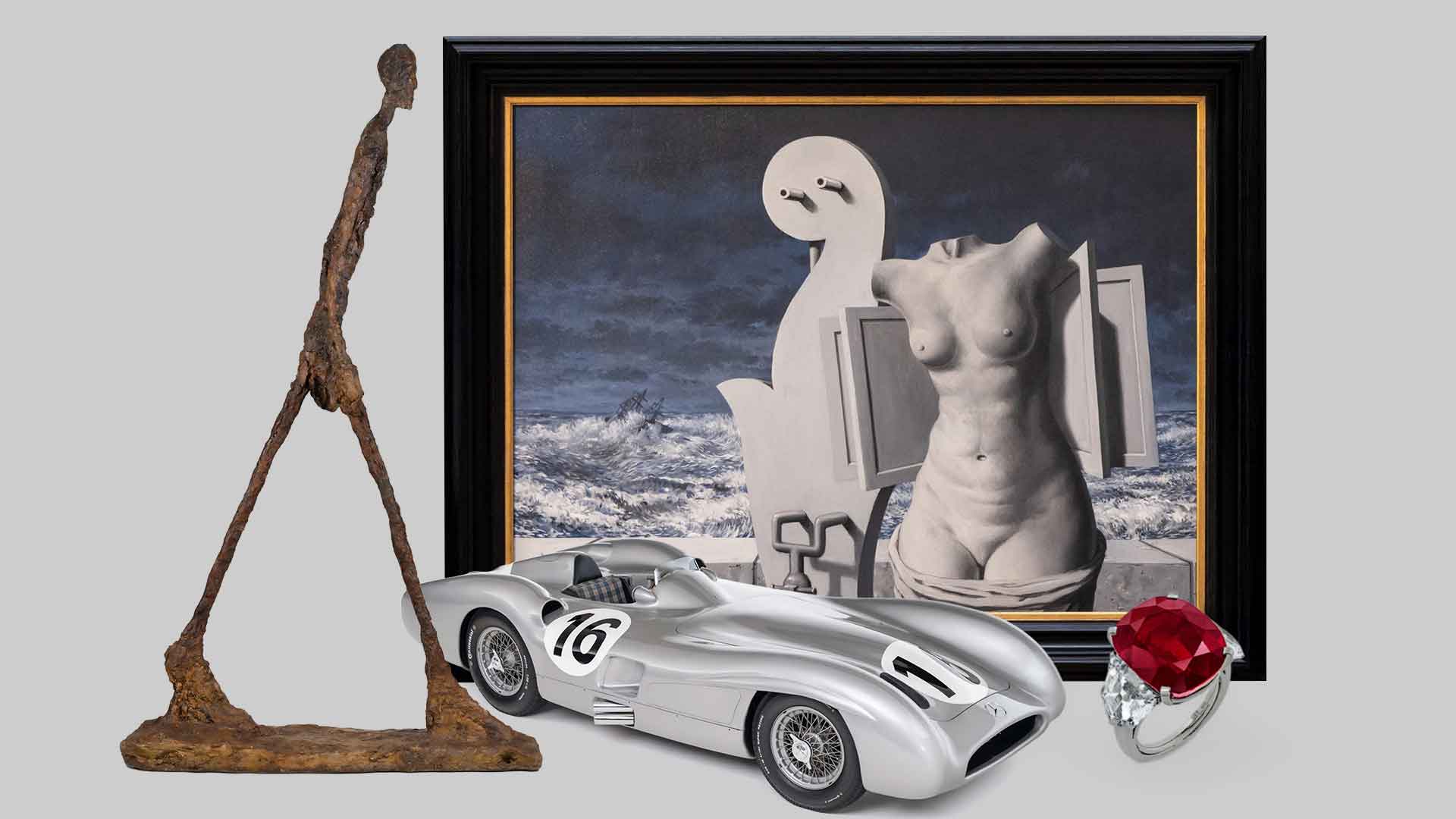
Red rocks dazzle collectors, streamliner secures F1 auction record, Magritte masterpiece flies high at sale & walking tribute to Giacometti’s legacy

Ruby Rising

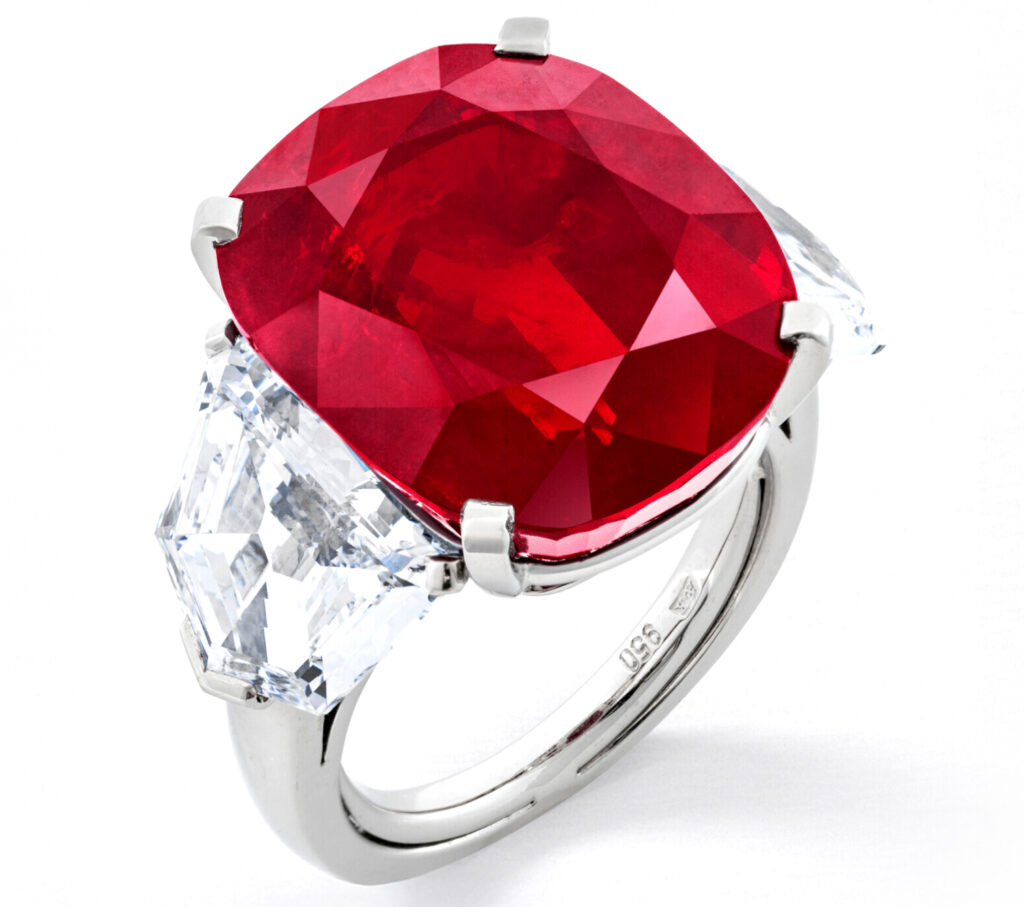
The Sunrise Ruby, a superb 25.59-carat Burmese gemstone set in a Cartier ring flanked by diamonds, made history when it sold for US$30.3 million (HK$235.5 million) at Sotheby’s Geneva back in 2015. A decade ago, this amounted to a world record for the most expensive ruby sold at auction, as well as the highest price ever paid for a coloured gemstone and a Cartier jewel.

The ruby’s name is inspired by a poem by 13th-century Sufi mystic Rumi, adding a layer of poetic allure to its legacy. Its sale served to elevate rubies to new heights of prestige. Their rarity and radiance as the gemstones of royalty strike a chord with collectors, especially in Asia, where the colour symbolises joy and good fortune.

The Sunrise Ruby is classified as ‘pigeon’s blood’ red, the most coveted hue for rubies, and is untreated, significantly enhancing its value.

This sumptuous jewel has since been pipped as the most expensive ruby ring sold by Sotheby’s. That honour is now claimed by the Estela de Fura, an immense 55.22-carat ruby which sold for US$34.8 million in 2023.

Fast & Glorious

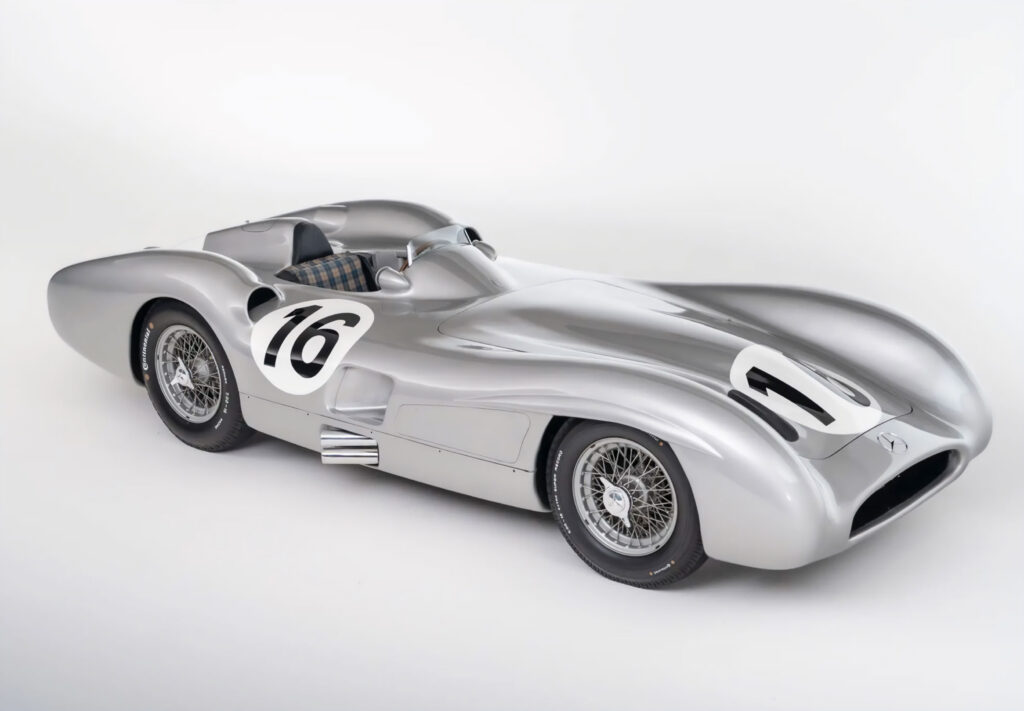
A 1954 Mercedes-Benz W 196 R Streamlinienwagen became the most valuable Grand Prix car ever sold at auction when it rolled off the RM Sotheby’s block for €51.2 million (HK$458.4 million) in Stuttgart earlier this year. One of four known complete examples mounted with the original enclosed-fender coachwork at the conclusion of the 1955 Formula One season, this rare racer is celebrated for its pivotal role in motorsport history. The model’s streamlined body reduced drag and enhanced speed – an innovation that helped Mercedes dominate the racing scene in the mid-1950s.

Powered by a 2.5-litre straight-eight engine with fuel injection, the W 196 R Streamliner delivered exceptional performance and engineering precision. It was driven by legendary racers, including Juan Manuel Fangio, who steered the car to victory in the 1955 Buenos Aires Grand Prix.

The Streamliner’s lightweight aluminium construction and advanced suspension system made it a technical marvel of its time. Its record-breaking sale underscores the enduring appeal of vintage motorsport engineering and the prestige associated with Mercedes-Benz’s racing legacy.

Statue of Mystery

René Magritte’s La Statue Volante (v) is a hauntingly poetic example of surrealist mastery, reflecting the artist’s enduring fascination with paradox and the uncanny. Painted during a mature phase of his career, it distils signature themes the Belgian began exploring in the 1920s and 1930s: dislocation, mystery and the subversion of reality.

In this 1958 iteration, Magritte’s iconic Venus de Milo motif is seen grounded in the foreground – a symbol of classical permanence set against the turbulent backdrop of a storm at sea, where a lone ship is battered by the waves. Such unexpected and inexplicable contrasts –characteristic of the artist – arouse provocative musings on the boundaries between the real and the imagined.

After remaining in the hands of English contemporary art collector Pauline Karpidas for more than 40 years, the work made its auction debut at Sotheby’s London in September this year. The star lot of an evening sale, it secured £10.12 million (HK$103.4 million), affirming its status as a surrealist icon and a collector’s treasure.

Go Figure

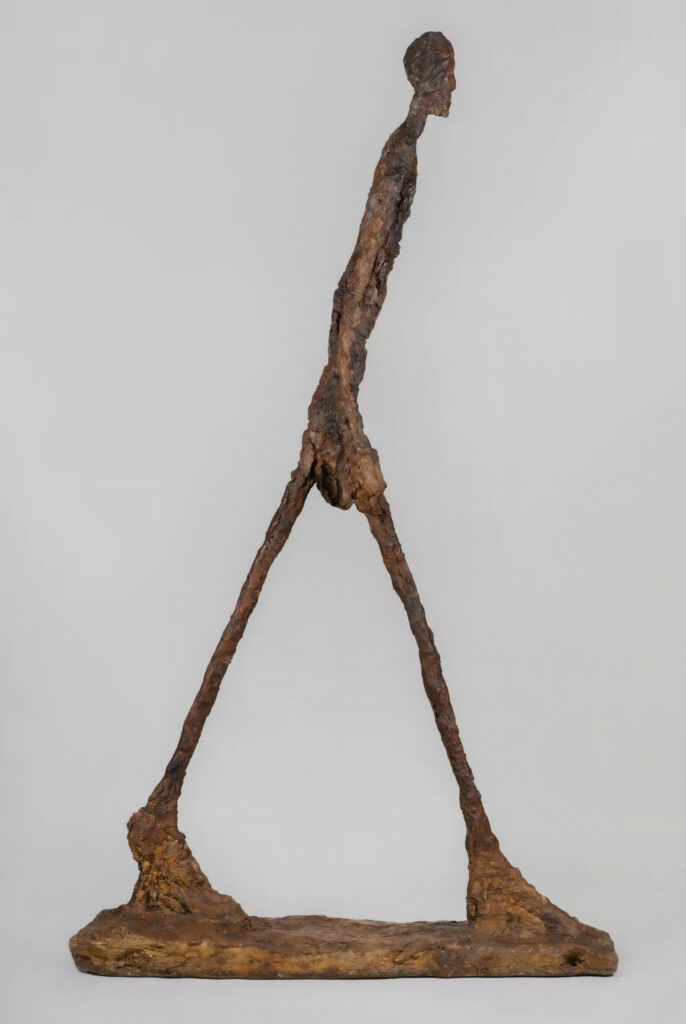
Alberto Giacometti’s L’Homme qui marche (The Walking Man) is one of the most iconic sculptures of the 20th century, embodying existential themes through its elongated, textured form. A second edition of the cast sold for a mammoth US$104.3 million (HK$813.1 million) back in 2010, assuming its place as the most expensive sculpture sold at auction. It was toppled from the top spot five years later by another Giacometti masterpiece, L’Homme au doigt (Pointing Man).

The Swiss sculptor created a series of walking figures in the 1960s, each capturing the tension between motion and stillness. Cast in bronze, The Walking Man strides forward with haunting fragility and determination, reflecting Giacometti’s exploration of isolation and resilience. It stands six feet high, yet its slender proportions evoke vulnerability rather than grandeur.

With few casts in circulation, collectors regard The Walking Man as a pinnacle of modern sculpture. Its presence in a private collection or museum signifies a deep appreciation for Giacometti’s philosophical and artistic legacy – a legacy that continues to challenge and inspire audiences worldwide.

Under the hammer: Fab Three auction sales (November 2025)

Muse Bouche

Pablo Picasso’s Buste de Femme (1944), an emotionally charged work depicting his muse and fellow Surrealist Dora Maar, set a new auction record for the artist in Asia when it fetched a hefty HK$196.75 million (US$25.4 million) at Christie’s Hong Kong in September. Painted near the end of the four-year Nazi occupation of Paris during the Second World War, the portrait stands as a striking testament to the artist’s emotional intensity and wartime resilience.

Maar’s likeness is captured in a fragmented style. Her face is divided into bold, angular planes – one eye alert and expressive, the other obscured – and her mouth appears in profile, all suggestive of inner turmoil and psychological depth. Vivid hues of red, green and blue swirl across the canvas, enhancing the drama of her stylised features. Her ornate headwear adds a theatrical touch, reinforcing the surreal tension of the composition.

Buste de Femme reflects Picasso’s defiance and introspection during a time of global upheaval. Its handsome sale price underscores the enduring power and relevance of his wartime creations, and the continued fascination with Maar’s enigmatic presence in his oeuvre.

Indelible Ink

Depicting an idyllic utopia framed by mountains, Zhang Daqian’s In Search of Paradise (1981) showcases the globetrotting Chinese artist’s signature splashed-ink technique at its expressive peak. Painted after he settled in Taiwan, this late-career masterpiece reflects Zhang’s deep engagement with traditional Chinese landscape painting, reimagined through a modern, abstract lens. The composition is dreamlike – the mountains dissolve into mist, and washes of ink and colour blend seamlessly to evoke a sense of spiritual transcendence.

Hailed as one of the most influential Chinese artists of the 20th century, Zhang developed this unique style after his eyesight began to deteriorate. He embraced bold experimentation, using splashed ink and colour to convey mood and atmosphere over precise detail.

The star lot at a Christie’s Hong Kong auction held earlier this year, this scroll sold for HK$14.29 million (US$1.84 million), significantly exceeding its low estimate of HK$10 million. Its success underscores Zhang’s enduring appeal among collectors and scholars alike, affirming his legacy as a visionary who reshaped the trajectory of Chinese ink painting.

Venice Flood

Venice, the Return of the Bucintoro on Ascension Day by Canaletto spurred a fiercely competitive bidding war at Christie’s London this summer, soaring to £31.9 million (HK$336.6 million). This astounding result – the second-highest price for an Old Master in the auction house’s history – surprised some experts who consider it a rather conventional work. Others suggest the high price was driven by its status as a perfect trophy piece for art connoisseurs.

The artist is revered for his views of Venice, and painted in the 1730s, this picture depicts the important Ascension Day festival in which a procession of ships, led by the Doge’s magnificent Bucintoro, marks the symbolic marriage of the city with the sea. Veteran dealer Robert Simon describes it as an ideal Canaletto, citing its grand scale, energetic composition, and broad appeal to collectors beyond the Old Master field.

Contributing to the work’s allure is an illustrious provenance, including British Prime Minister Robert Walpole, who displayed it at his residence, 10 Downing Street in London. Its extreme scarcity is also a major factor; no comparable work has appeared since it last sold in 1993.

Under the hammer: Fab Three auction sales (October 2025)

Queen’s Diamond

In a landmark event that captivated the global jewellery community, the magnificent Marie-Thérèse Pink Diamond achieved a spectacular result at Christie’s New York, realising US$13.9 million (HK$108.3 million). Set into a contemporary ring by cult Paris-based jeweller JAR, the stone is steeped in European royal history, beginning with Marie Antoinette, the last queen of France.

Thought to have been smuggled out of Paris in 1791, the diamond’s designation comes from a succession of aristocratic owners. Marie Antoinette’s daughter, Duchess Marie Thérèse de Angoulême, passed it to her niece, Duchess Marie Thérèse de Chambord, who in turn gifted it to her niece, Queen Marie Theresa of Bavaria. Its extraordinary character perfectly complements the elegance of a bygone era that its name evokes.

The breathtaking purple-pink kite-shaped diamond is a true phenomenon of nature, weighing 10.38 carats and highlighted by a character of brilliance and fire. The New York hammer price not only solidifies its status as a legend, but also underscores the continued supremacy of rare coloured diamonds.

Superstar Supercar

A one-of-a-kind Ferrari Daytona SP3 shattered records at RM Sotheby’s Monterey sale, going for an astonishing US$26 million (HK$202.7 million) – the highest price ever achieved for a new Ferrari at public auction. This bespoke model, dubbed the ‘599+1’, was commissioned beyond the original 599-unit production run and sold to benefit the Ferrari Foundation.

The car’s striking two-tone exterior features exposed carbon fibre and Giallo Modena livery, with the first-ever full-length Ferrari logotype emblazoned across the body – a bold design statement that blends heritage with innovation. The cabin, meanwhile, showcases the marque’s commitment to both luxury and the environment. It is finished in Q-Cycle, a sustainable fabric made from recycled tyres, complemented by yellow seatbelts and embroidered Prancing Horse motifs.

Powered by a naturally aspirated 6.5-litre V12 engine, the SP3 delivers 829 horsepower, accelerating from 0-100 km/h in just 2.85 seconds. This sale not only marked a milestone in automotive history but also underscored Ferrari’s philanthropic vision, with the tailor-made Daytona racing to a new home as a symbol of speed, style and social impact.

Mars Attracts!

The largest Martian meteorite discovered on Earth has become the most valuable chunk of rock from outer space sold at auction. NWA 16788, named for Northwest Africa where it was recovered, garnered a hefty US$5.3 million (HK$41.3 million) at Sotheby’s in New York. Weighing 54 pounds (24.7 kilograms), it is 70% larger than any other known Martian specimen.

Scientists believe it was blasted off that planet by an asteroid strike, travelling 140 million miles (225 million kilometres) before landing in the sand of the Sahara Desert in Niger. Found in 2023, its red-brown colouration is indicative of its origin and its pristine condition is suggestive of a relatively recent arrival.

Only about 400 Martian meteorites have ever been documented, most of them tiny fragments. NWA 16788 is a rare exception, offering a once-in-a-generation opportunity for collectors and researchers alike. Its sale sparked controversy, however. Angry questions have been raised about provenance and international trafficking, with the Niger authorities investigating whether it was exported through illicit channels.

Under the hammer: Fab Four auction sales (September 2025)

Four remarkable lots that impressed bidders in recent auctions are featured in this month’s Look Section: legendary tiara shines anew; Basquiat’s bold street cred appreciated; architect’s table lamp in spotlight & sculpture of despair yields joy

Astor Revisited

A Bonhams London auction this summer brought back to light one of Cartier’s most storied creations – the Astor Turquoise and Diamond Tiara. Purchased by Waldorf Astor in 1930 for his wife, Nancy Astor, the first woman to sit in the British Parliament, this masterpiece blends political history with exquisite craftsmanship. The tiara showcases vibrant turquoise carved into elegant plumes and foliage, framed by brilliant-cut and rose-cut diamonds that shimmer with period charm. Its Eastern-inspired motifs reflect Cartier’s flair for opulent design during the Art Deco era.

More than just ornamentation, this tiara symbolised the American-born Viscountess Astor’s groundbreaking role in British society. It hadn’t surfaced publicly since then, making its £889,400 (HK$9.3 million) sale a landmark event for collectors and historians alike. A beacon of female empowerment and artistic vision, it remains an enduring testament to Cartier’s legacy – and to a woman who dared to redefine her place in history.

Whether worn, displayed or admired in auction catalogues, the Astor Tiara reminds us that high jewellery isn’t just about sparkle; it’s about stories carved in stone and precious metal.

Untitled Youth

Jean-Michel Basquiat’s Untitled (1981) is a frenetic portrayal of a mythical figure seemingly entering battle, scrawled in oilstick on paper. Created when the American artist was just 20 years old, the piece channels his graffiti roots and neo-expressionist style into a raw meditation on race, mortality and identity, reflecting his experience as a young Black man navigating the elite art world. It marked the beginning of a two-year period when Basquiat moved from street artist to mainstream. Many critics judge this early period to be his best, and these Untitled works have achieved high prices at auction.

Having been secured in a private collection since 1989, this particular piece re-entered the market with a bang – selling at Sotheby’s in New York for a staggering US$16.4 million (HK$128.7 million). Remaining a cultural flashpoint, its chaotic lines and vibrant palette speak to the urgency of Basquiat’s vision. His early works, including the record-breaking Untitled skull of 1982, aren’t just paintings; they form a collective manifesto daring viewers to confront the beauty and brutality of existence.

Enlightened Wright

A new benchmark for design history was set earlier this year when Frank Lloyd Wright’s Double-Pedestal Table Lamp sold for a record-breaking US$7.5 million (HK$58.9 million) at Sotheby’s in New York. Originally created around 1903 for US philanthropist Susan Lawrence Dana’s house in Springfield, Illinois, the lamp is one of only three ever made – and the only one ever offered at public auction.

Crafted from iridised and opalescent glass, brass-plated zinc and bronze, the lamp’s architectural silhouette echoes Wright’s Prairie style. Its geometric shade, inspired by the sumac plant, shifts in colour from green to amber depending on the light. Hinged side panels evoke Japanese shoji screens, reflecting Wright’s admiration for Eastern design.

More than a lighting fixture, the lamp embodies Wright’s philosophy of total design, in which architecture, furniture and décor form a unified whole. Commissioned by Dana with a “blank cheque”, the lamp was part of a radical reimagining of domestic space. This sale not only crowned Wright’s most valuable object at auction, but also reaffirmed his enduring influence on American design and modernist aesthetics.

Rodin Reaction

A white marble sculpture by Auguste Rodin, long dismissed as a copy, sold for €860,000 (HK$7.8 million) in west-central France this summer, stunning the art world. Le Désespoir (Despair), sculpted in 1892-93, channels the intensity of emotional suffering into a quietly powerful form. It portrays a nude woman seated with her torso collapsed inward, holding her foot out in one arm. The posture radiates tension and isolation, as if her entire body were weighed down by grief. Though modest in size, at 28.6cm high, the anatomical precision and emotional depth give it tremendous presence.

The piece was originally intended to be part of Rodin’s epic work, The Gates of Hell, inspired by Dante’s Inferno, yet it stands alone as a haunting meditation on despair and human vulnerability. For decades, it sat unrecognised atop a piano in France. But in June, after authentication by the Comité Rodin, it was thrust into the spotlight and sold at auction at Château de Villandry. The winning bidder was a young US banker, captivated by the sculpture’s quiet power and remarkable story of rediscovery.

Under the hammer: Fab Four auction sales (August 2025)

Razor Edge

Sotheby’s Maison in Hong Kong is shining a spotlight on A Vanitas, an audacious jewellery capsule collection that fuses the 17th-century Dutch vanitas art tradition with modern rebellion. Created by renowned goldsmith Hannah Martin and Coldplay’s bassist-cum-fashion designer Guy Berryman, the pieces feature striking blue sapphires and bold motifs, including reimagined razor blades – symbols of life’s fleeting beauty. Inspired by Martin’s boundary-pushing aesthetic and Berryman’s design vision, they serve as wearable meditations on seizing the moment.

Highlights include a yellow-gold razor necklace, a sleek signet ring and a daring bangle reminiscent of a hospital ID tag, all imbued with contemporary spirit. Presented alongside a selection of the London jeweller’s past creations, the collection challenges conventions and invites conversation about mortality and vitality. Sotheby’s Maison, smartly ensconced within Landmark Chater in Central, elevates the experience with immersive displays and curated retail spaces, offering connoisseurs the chance to own a piece of this rebellious yet refined narrative. It’s a collection that truly says, “Now or never.”

Bag of Gold

In a fashion frenzy, Hermès’ inaugural Birkin fetched a staggering €8.6 million (HK$78.5 million) at the Sotheby’s Paris Fashion Icons auction last month, smashing previous handbag records and sealing its place in luxury legend. Carried daily for a decade by its namesake owner before it was donated to a charity auction, the worn yet iconic prototype ignited a bidding war, starting at €1 million and soaring past €7 million before it was clinched at this elevated price. The winner? A private collector from Japan, whose victory underscores the bag’s global allure.

This historic sale eclipses the previous record held by a diamond-studded Kelly 28, which sold for HK$4 million in 2021. The first Birkin, completed in 1984 after a chance airline encounter between the British-born, French-cinema star Jane Birkin and Hermès CEO Jean-Louis Dumas, was intended as a functional yet stylish tote for a young mother. Now, it’s a priceless piece of fashion history – and a testament to how luxury can truly reach new heights. Who knew a handbag with a late actress’s nail clipper attached to its strap could be worth its weight in gold?

Body of Work

British figurative artist Jenny Saville is once again making waves, this time with her striking charcoal drawing, Mirror (2011-12), which shattered auction records at Sotheby’s London. Measuring more than 1.5 by 2 metres, the monumental work reimagines the reclining nude, fusing multiple intertwined figures into a dense composition that draws inspiration from titans like Titian, Manet and Picasso. Its unparalleled £2.11 million (HK$22.2 million) sale underscores Saville’s evolving mastery of the female form.

Known for her visceral oil paintings that challenge conventional beauty standards, Saville has recently embraced charcoal’s immediacy – a shift influenced by motherhood and a desire for spontaneity. Her current London retrospective,

The Anatomy of Painting, which runs at the National Portrait Gallery until 7 September, is the largest major museum exhibition in the UK dedicated to a leading contemporary painter. Offering a rare glimpse into her ongoing quest to redefine the human body in art, it showcases 45 works spanning the 55-year-old’s career so far. Saville continues to reshape the canvas of figurative art.

Surreal Soar

Animal, vegetable, sculptural – in a world where furniture and art collide, Les Lalanne’s whimsical creations continue to enchant collectors and investors alike. Bronze sheep you can sit on, a cabbage perched atop the legs of a bird, or geese supporting a glass dining table – fantasy blurred into function in the French duo’s surreal universe. Over the decades from first meeting in 1952 to marrying in 1967 to their passing in 2008 and 2019 respectively, François-Xavier and Claude Lalanne transformed everyday objects into botanical and animal-inspired masterpieces that challenged perception.

The market buzz of the sculpting couple has skyrocketed recently. At Sotheby’s New York in June, the towering Grand Rhinocrétaire II, a bronze rhinoceros that unfolds into a desk, sold for a whopping US$16.4 million (HK$128.7 million) – more than triple its high estimate and the second-highest Lalanne auction price ever. Just the month before, their Bar aux Autruches (Ostrich Bar) fetched €11.1 million (HK$101.6 million) in Paris. As Les Lalanne’s works continue to command record-breaking figures, their whimsical worlds prove that in art and design, fantasy truly pays off.

Under the hammer: Fab Four auction sales (July 2025)

Resplendent Regent

Asensational 35.09-carat sapphire ring sparked a bidding war at a recent sale in Hong Kong. In a packed auction room bedazzled by the beauty of this magnificent jewel known as The Regent Kashmir, two mesmerised collectors went head to head, raising the asking price to well within the HK$65 million to $95 million estimate. The star lot eventually sold for a colossal HK$74.7 million (US$9.5 million), achieving a new per-carat record of US$271,515 for a sapphire at auction.

With this fall of the hammer, the antique cushion-shaped sapphire set in a platinum and diamond ring notched up the further accolades of most valuable gem auctioned in Asia this season, and most valuable sapphire sold anywhere in the world so far this year. It came with reports attesting to its ‘royal blue’ colour, origin, weight, clarity and absence of heat enhancement.

Many gemologists consider Kashmir sapphires to be the finest in the world. Their velvety blue hue, glowing intensity and a certain softness render them particularly appealing. This allure, combined with their rarity, accounts for the long-time desire by the well-heeled to have them on hand.

Circle of Time

The auction of a highly significant historical clock built by F.P. Journe for Breguet in 1991 had Geneva abuzz when it was claimed by the maker himself who sat on the front row. Adding to the drama was the sum he paid – an astonishing 5.5 million Swiss francs (HK$52.7 million), far above the anticipated price and representing a world record for a modern sympathique clock. 

Crafted by Journe when he helmed visionary workshop Techniques Horlogères Appliquées, the Pendule Sympathique Clock No. 1 pays homage to Breguet’s watchmaking legacy. The beautiful instrument of time recaptures a forgotten complication. Standing at a height of 255mm and made from 18-carat yellow gold, the clock was paired with a Breguet gold tourbillon wristwatch as part of Phillips’ Geneva Watch Auction XXI.

The sale, which featured timepieces spanning more than 150 years from Switzerland, Germany, England and France, raised US$52 million in total. Its success reaffirms the enduring appeal of great watchmaking, according to Phillips’ spokesperson Tiffany To. Collectors who were outbid for the prized clock will be able to admire it at the upcoming F.P. Journe museum in Geneva.

Pumpkin Queen

Asuperb example of Yayoi Kusama’s signature pumpkin paintings caused a flurry of bids when it was auctioned in Hong Kong earlier this year. Pumpkin (HRU), an acrylic on canvas created by the iconic Japanese artist in 2014, had been given a pre-auction estimate of HK$25 million to $35 million, but enthusiastic bidding tipped the final asking price over this mark. It changed hands for a substantial HK$39.1 million (US$5 million).

The work, which is signed, titled, titled again in Japanese, and dated on the reverse side, was originally purchased by celebrated British art dealer Victoria Miro in London. Additionally, a 2016 small pumpkin sculpture in mirror-polished bronze was sold for HK$13.7 million during this evening sale of 20th- and 21st-century art.

This latest successful sale of works by Kusama attests to the enduring appeal of Japan’s grande dame of Pop Art, who is still active today at 96 years old. Pumpkins have featured prominently in her output over the decades, appearing in installations and many large-scale sculptures as well as paintings.   

Staying on Script

The right to own a late Yuan Dynasty scroll set off an astonishing bidding battle at Sotheby’s Hong Kong. More than 200 bids were placed at the recent auction of Calligraphy in Cursive Script penned by the 14th-century poet and calligrapher Rao Jie, delaying hammer fall for a mammoth 95 minutes. Multiple telephone and in-room bidders pushed the final price of the ancient handscroll to HK$250 million (US$32 million), an incredible 20 times its presale estimate.

Undoubtedly the auction result represents a major fillip to the Chinese art market, which has flagged over the past five years. In this rare treasure which once belonged in the Qing imperial collection, Rao transcribed two literary classics, Han Yu’s Farewell to Meng Dongye and Liu Zongyuan’s The Tale of the Carpenter. It stretches almost 10 metres in length and has more than 100 seals.

According to Steven Zuo, Head of Fine Classical Chinese Paintings and Calligraphy at Sotheby’s Asia, works from the Yuan Dynasty are particularly prized for their rarity, and he also noted that this lot was the most valuable Chinese calligraphy ever sold at Sotheby’s.