




In the world of fine spirits, aged whisky occupies a rarefied space where craftsmanship meets capital appreciation. Once purchased simply to drink, certain bottles are now treated like blue-chip assets, traded at the international auction houses with the same intensity as fine art.
Not every old whisky qualifies as investment grade, however. Age alone is not enough. True collectible status is built through a combination of rarity, reputation, provenance, condition and sustained market demand that transforms a bottle into liquid gold.
Maturation is the foundation of prestige whisky. Decades spent in oak casks develop complexity, concentration and depth. A 40-, 50- or 60-year maturation signals extreme scarcity because casks lose volume over time through evaporation, known as the angel’s share. After half a century, only a small quantity may remain suitable for bottling.
Unlike wine, whisky does not evolve after bottling; hence, value depends entirely on collectability rather than drinkability. Many investment-grade bottles remain sealed indefinitely.
Brand Recognition
Longevity alone does not guarantee value, though. A 50-year release from an obscure producer rarely commands extraordinary prices. Age must be supported by brand credibility and collector confidence.
Investment-grade whisky is typically anchored in iconic distilleries with international recognition. Names such as The Macallan, The Dalmore, Bowmore, The Yamazaki and Karuizawa carry decades, sometimes centuries, of heritage. Collectors trust producers known for consistent quality, limited releases and strong secondary-market performance.
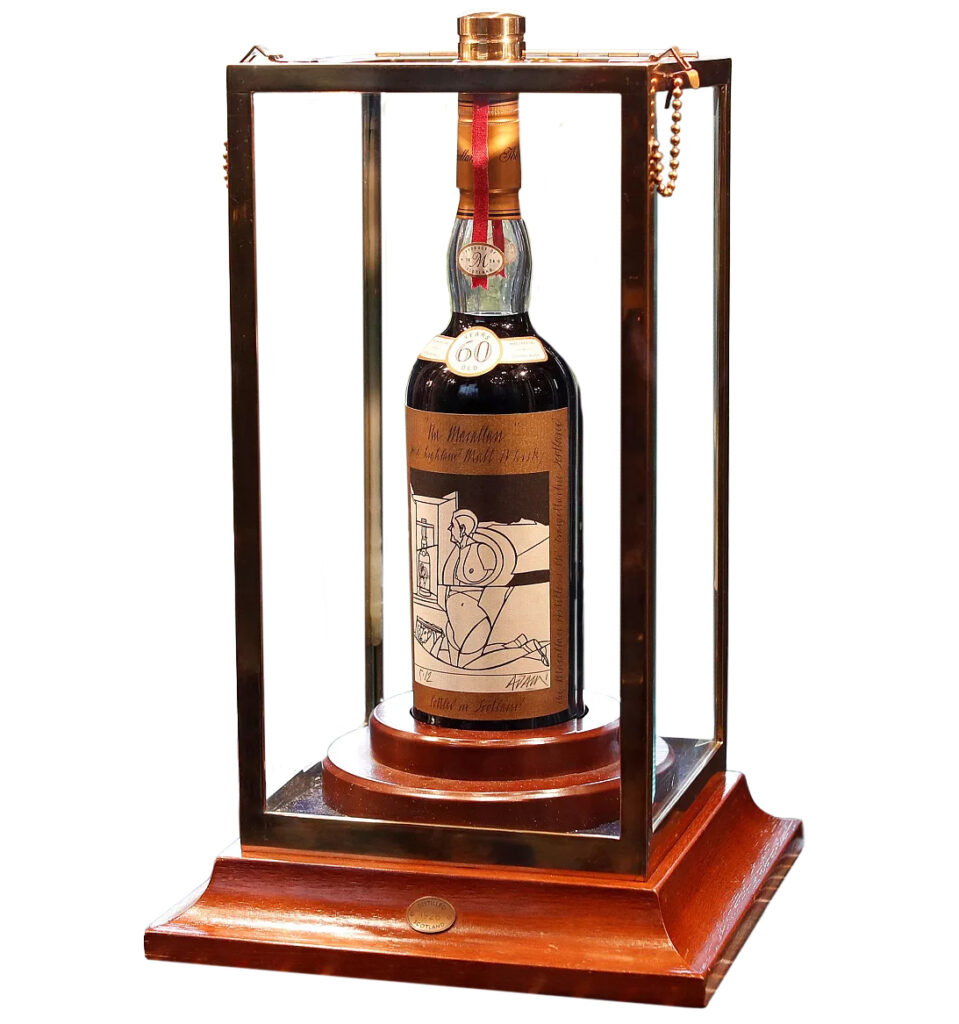
The Macallan 1926 series dominates auction headlines not solely because of its age, but because the distillery’s reputation reinforces desirability and liquidity. Established brand strength makes resale easier and reduces perceived risk for investors.
Rare Trust
Scarcity further drives value. Many record-breaking bottles were produced in extremely small numbers, sometimes fewer than 40 worldwide. Others originate from closed distilleries, meaning no additional stock will ever be created. Limited single cask releases, commemorative editions and historic production years also heighten rarity.
Condition and provenance – the assurance of documented ownership history and proper storage – are critical in determining price. A bottle accompanied by certificates, distillery records or a traceable chain of custody inspires confidence. Investment-grade bottles must retain original packaging, unbroken seals, appropriate fill levels and undamaged labels.
Even minor imperfections can reduce value dramatically. Auction houses carefully inspect high-value lots, and transparency strengthens collector trust.
Liquid Luxury
Presentation also influences valuation. Luxury releases are frequently housed in handcrafted decanters produced by heritage crystal makers such as Lalique or Baccarat. Some feature hand-painted labels, precious metals or artistic collaborations. These details elevate the bottle beyond beverage status and position it as a collectible object.
Emotional narrative further enhances desirability. Whiskies distilled before the Second World War, bottled during milestone anniversaries, or overseen by renowned master distillers carry historical significance. Buyers respond to stories that connect liquid to heritage.
When design, storytelling and craftsmanship converge, the whisky appeals not only to connoisseurs but also to art and luxury collectors. Some investors treat whisky as part of a diversified portfolio alongside art, watches and fine wine.
Whisky Soar
Market performance ultimately determines investment status. Collectors analyse auction data, tracking hammer prices, frequency of resale and geographic bidding patterns. The rise of Asian buying power, particularly in Hong Kong and Singapore, has expanded demand and strengthened price resilience.
Valuation generally relies on comparable sales, rarity indices, brand trajectory, condition grading and the broader economic climate. Bottles that demonstrate consistent appreciation over several years gain credibility.
Storage and insurance complete the equation. High-value bottles require stable temperatures, minimal light exposure and secure facilities. Serious collectors often insure collections and maintain detailed documentation. Professional storage services and bonded warehouses have emerged to support this growing asset class.
An investment-grade whisky represents the intersection of time, scarcity, reputation and demand. It is less about age alone and more about confidence in enduring desirability. At the highest tier, these bottles transcend their liquid contents. They become cultural artefacts – symbols of craftsmanship preserved in glass – valued as much for their narrative and rarity as for the spirit they contain within.