




Ageless Bronze
When the imposing Figure Décorative bronze by Henri Matisse achieved US$16.7 million (HK$130.5) at auction, the result resonated far beyond the Sotheby’s New York sale room. It was not only a record-setting transaction – the second highest ever for a Matisse bronze sculpture – nor just a reaffirmation of the French visual artist’s stature. Instead, the moment marked a profound shift in how collectors are reassessing sculpture’s physicality and permanence in an era dominated by the intangible.
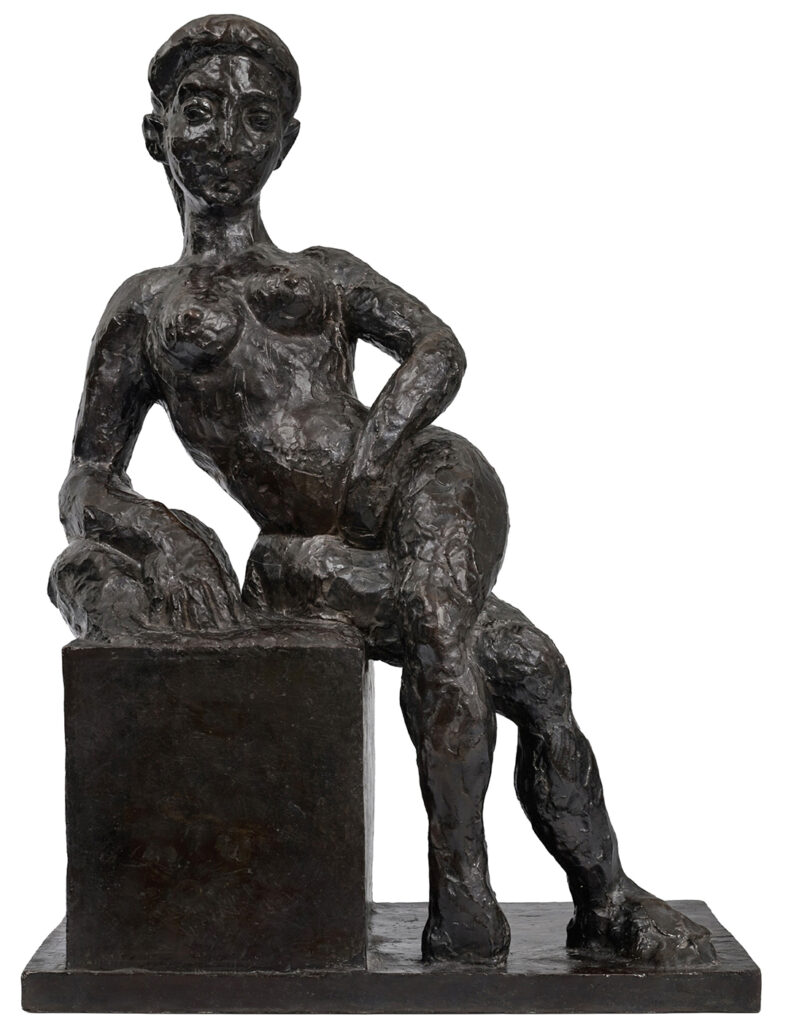
Matisse is best known as a painter of radiant colour and lyrical line, yet his sculptural practice was never secondary. For him, bronze was a medium where form could be stripped of excess and the beauty of the human body celebrated. Figure Décorative, conceived in Paris in 1908 and cast in 1950, embodied this ethos. Its curved contours, balanced volumes and strident but serene gaze personify a fusion of modernist innovation and classical idealism. Matisse’s sculptures are now understood as foundational to his thinking about form and balance. They reveal the discipline behind the freedom, and the structure beneath the colour.
Emerald Geometry
For a Cartier Art Deco emerald and diamond bracelet to command as much as £1.1 million (HK$11.7 million) at auction in London was not a surprise for connoisseurs but a confirmation. Christie’s spectacular sale of this treasure from the Wimbourne family collection reaffirmed what has long been understood: that the marriage of Cartier craftsmanship, Art Deco design and exceptional emeralds occupies one of the most enduring positions in the luxury market.
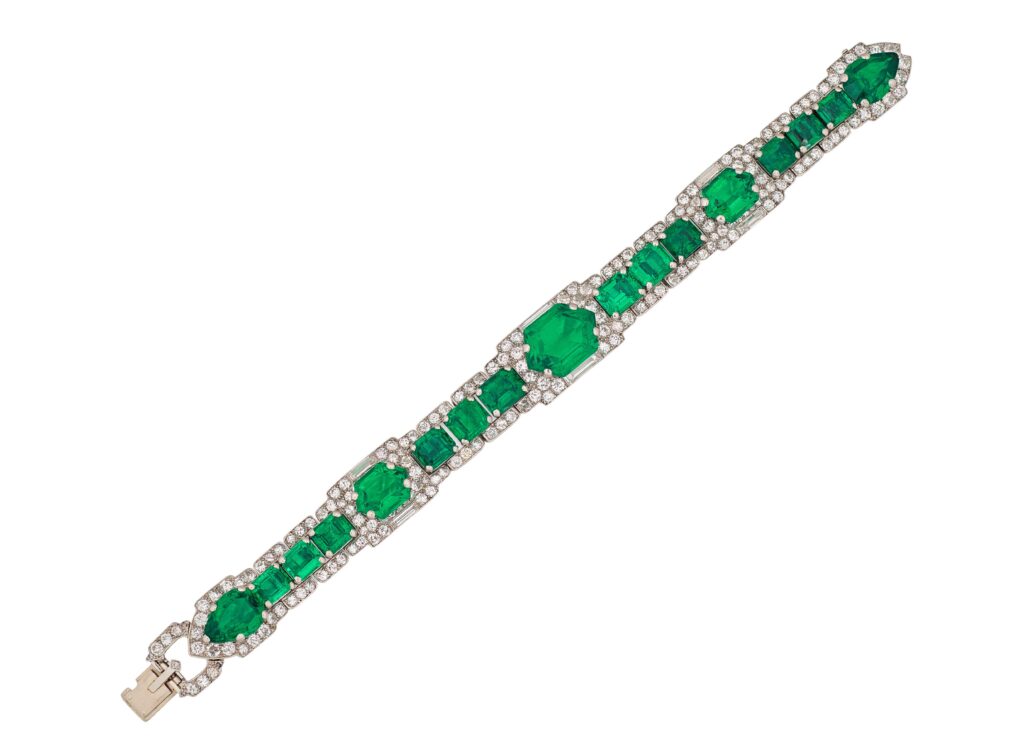
Created circa 1925, the bracelet exemplifies the aesthetic confidence of the Art Deco era, a period when Cartier redefined jewellery design through geometry, symmetry and a cosmopolitan vision. Set in platinum, it features 17 Colombian emeralds in pear, square, rectangular and hexagonal cuts interspersed with old‑cut and baguette diamonds arranged in crisp architectural harmony. The bracelet nearly tripled its pre-sale valuation. The result reflects a renewed appreciation for jewels as cultural artefacts, not merely ornaments. Once considered a secondary collecting category to fine art, jewellery is now understood as portable heritage – collectibles that carry artistry, rarity and narrative in equal measure.
Lovely Bones
The auction of a juvenile Triceratops skeleton for a mighty US$5.4 million (HK$42 million) marks a defining moment in the evolving relationship between science, art, cultural spectacle and high-end collecting. In Phillips’ first foray into the prehistoric natural world, the beautifully preserved dinosaur – joined by several other precious fossils – guest-starred at a prestigious New York evening sale of Modern and Contemporary Art. It went for more than double its low-end estimate, underscoring the notion that collectors at the top of the market are no longer constrained by traditional categories.
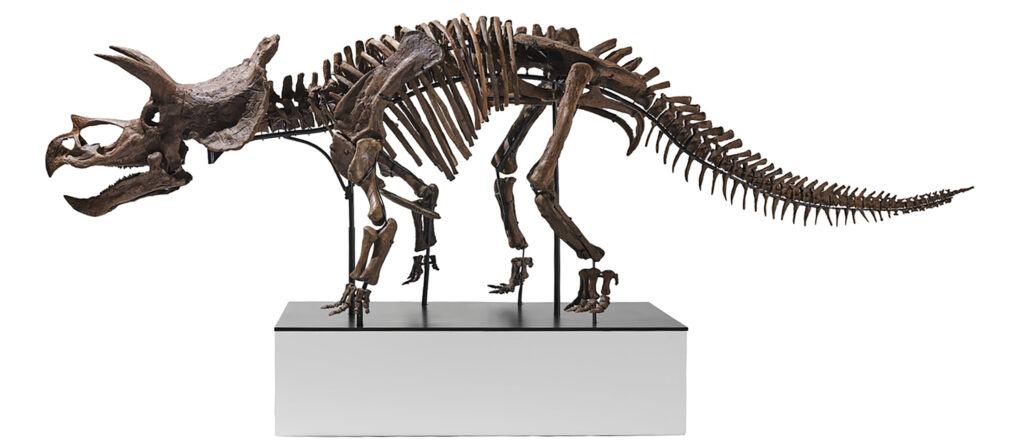
This two- to six-year-old Triceratops possesses a distinct emotional resonance. Smaller in scale at about 4.4 metres (14.4 feet) long, and lighter in structure, it evokes fragility rather than dominance, telling a quieter story of growth interrupted, of a life some 66 million years ago suspended in transition.
Unearthed a decade ago in the Badlands of South Dakota and mounted to museum standard, the skeleton boasts an impressive original-bone count of more than 70%. It’s an amount that makes this prized preservation the most complete juvenile Triceratops around – and one that will probably never be surpassed.
Instrumental Panel
Francis Bacon’s art has long occupied a singular position in modern canon – raw yet controlled, violent yet precise. In a market increasingly drawn to works that challenge as much as they reward, the most recent auction appearance of his unsettling 1967 diptych, Study for Head of Isabel Rawsthorne and George Dyer – which sold for a hefty US$16 million (HK$125 million) at Phillips New York – affirms the enduring authority of Bacon’s work and the unique emotional force of the diptych.
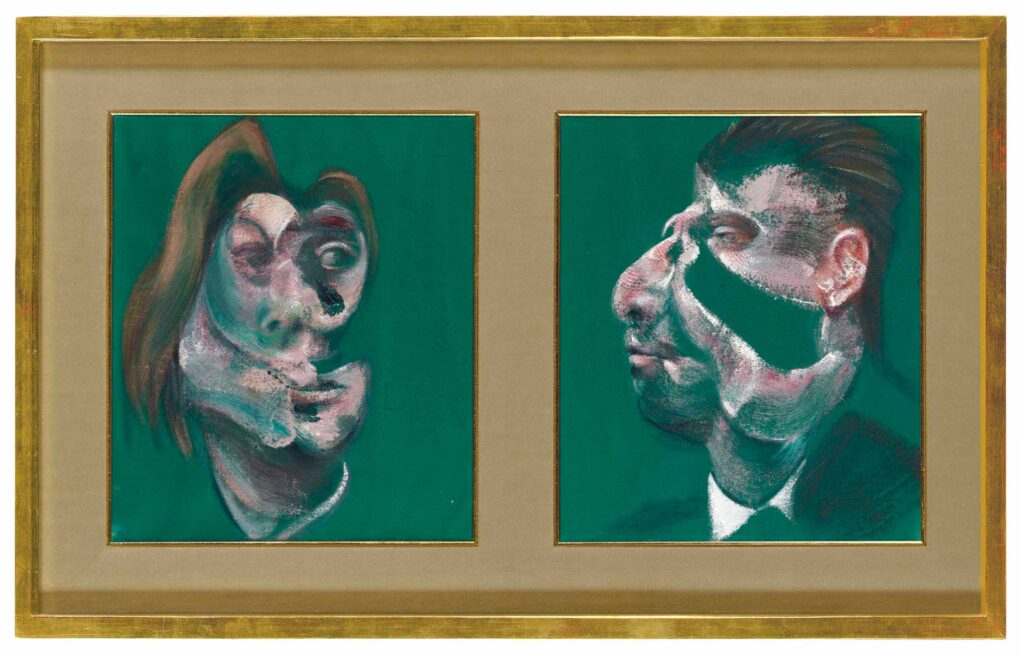
Painted in 1967, it is the first of only 10 diptychs by Bacon, and one of only two that pair the muses who were central to a defining decade in his life – close female friend Rawsthorne, and Dyer, his lover. The Irish-born British figurative painter turned to the diptych not as a narrative device but as a psychological one. Amplifying his lifelong obsession with fragmentation, two panels placed side by side create tension rather than resolution.
Bacon’s themes of power, vulnerability and isolation are timeless, but they also feel acutely contemporary. In a world marked by instability and psychological strain, his visual language feels less historical than prophetic.